
Three years on, the chat box is acting on your behalf
The first time I asked ChatGPT to draft some text, late 2022, it did, badly. The grammar was rough. The tone was a sort of eager intern who had read every CEO memo and was now trying to write one.
Three years on, the same chat box would write it almost finished. The grammar is fine. The tone reads like a person who had been paying attention.
What changed is not what most people think. The way it changed is what matters for a small firm in 2026.
A toolbelt, a worker, a to-do list
There are now three patterns in this space, and most people only know one of them.
The first is the chat box. You type a question. The model writes a paragraph or two. That is the pattern most people use. That is the pattern that has been on the news.
The second pattern is a harness. A harness is a toolbelt around the model. It gives the model access to your files, your calendar, your inbox. It lets the model do things, not just say things. Most paid plans now have some version of this. ChatGPT can browse. Claude can read a PDF and answer. Gemini can pull from your Gmail and write back.
The third pattern is an agent. An agent is the worker with the toolbelt, and a to-do list. You tell the agent what you want. It draws up a plan. It runs the plan. It checks its own work, or says it could not. It comes back when it is done, or when it is stuck. Most major vendors now have an offering in this shape. ChatGPT has an agent mode. Gemini has one. Claude has one. They are roughly in the same place. They are roughly a year old, and they are roughly improving fast.
What is actually beneath the model has moved. Three years ago, the model could draft an email. Today the agent can pay the invoice, file the receipt, and book the next call, all in one run.
Most of the progress was small
Here is the part that goes against the "AI is moving so fast" headline.
Read the model release notes for the last three years. Most of what shipped was small. A few per cent on a benchmark here, a small fix to a behaviour there. The progress chart looks less like a steep climb and more like a gentle staircase. Most steps are short. A few are not.
GPT-3.5 in late 2022 was a starting point. The leading US labs are still ahead, on the hardest reasoning work and the new multimodal tools. But the open-weight family (Llama, Mistral, the rest of the family you can download) has roughly caught up to where the leading US labs were about two years ago. The gap is far smaller than most people think.
For a small firm, that lands concretely. The chat box is not the move. The chat box is the easy entry. The move is the second and third patterns, harnesses and agents. The question is which one, and on whose hardware.
The trade space
The big vendor offerings (OpenAI, Google, Anthropic) are the ones most small firms will reach for first. They are the most polished. They are the most marketed. They are also the ones your data leaves the building through. The cloud, the model, the agent, all sit on someone else's hardware, and the conversation travels through.
The self-run options are the ones a small firm can put on its own desk. Ollama runs a model on a laptop. Mistral has direct downloads. OpenClaw runs locally and calls a model through a router. Nous Hermes is another. The capability is not as polished. The privacy posture is different. The conversation does not leave the building unless you let it leave.
Both patterns are legitimate. The move for a small firm is to know which trade you are making, and to make it on purpose.
Where the press sits
So the chat box is now an agent. With connected tools, the agent can pay an invoice, file a receipt, book the next call. In most offerings, the agent does this without asking. The agent runs the plan and produces the output.
Here is the bit I have not seen anyone offer, in any of the major vendor products or in any of the self-run repos I have used. None of them put a standing, enforced press before the agent acts: a page of rules the firm sets once, per action, that the agent cannot talk its way past.
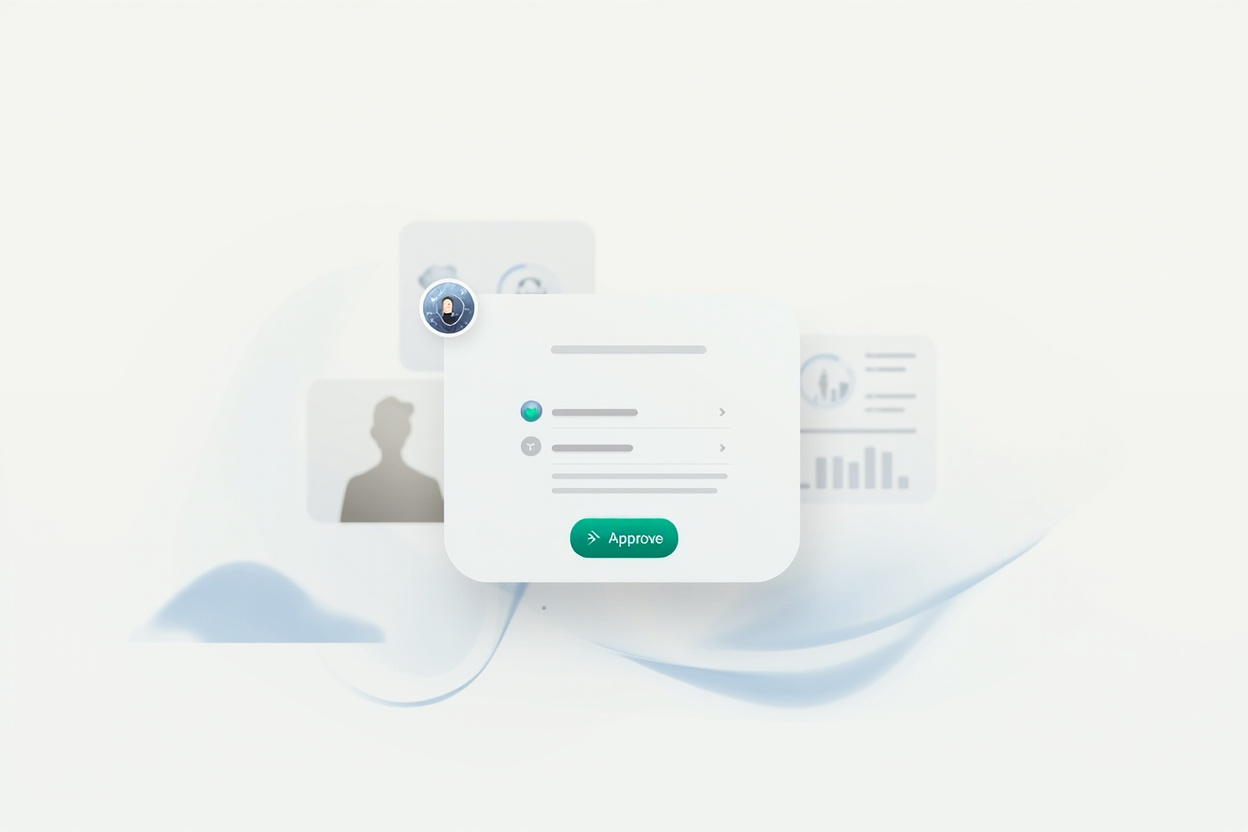
The press is the approval gate. The press is the page of rules, enforced. The press is the moment the agent stops, asks the firm, and waits for a yes before anything leaves the building. Email out. Bank instruction in. Customer reply out. Public post in. Any of those, the press sits before.
This is not a feature the vendors are missing on a roadmap. This is a posture, not a feature. The posture is that the agent is acting on the firm's behalf, and the firm is the one that says yes.
The line
The move, for a small firm in 2026, is not which agent you have. The move is whether the agent waits to be told. If your agent waits to be told, on every action that leaves the building, the chat box has done what you hired it for. If your agent does not wait, you are running a chatbot on rails and hoping nothing goes wrong.
The chat box is acting on your behalf already. The question is whether the firm sits at the press before it does.
That is the line.